Drapery is one of the few things in a hotel room that every guest touches, every single day. When the spec is right, nobody thinks about it. When it isn’t, housekeeping notices first, then the guests, then the reviews. Here’s what we look at when a drapery spec lands in our factory, and the decisions we suggest settling early.
Start with the track, not the fabric
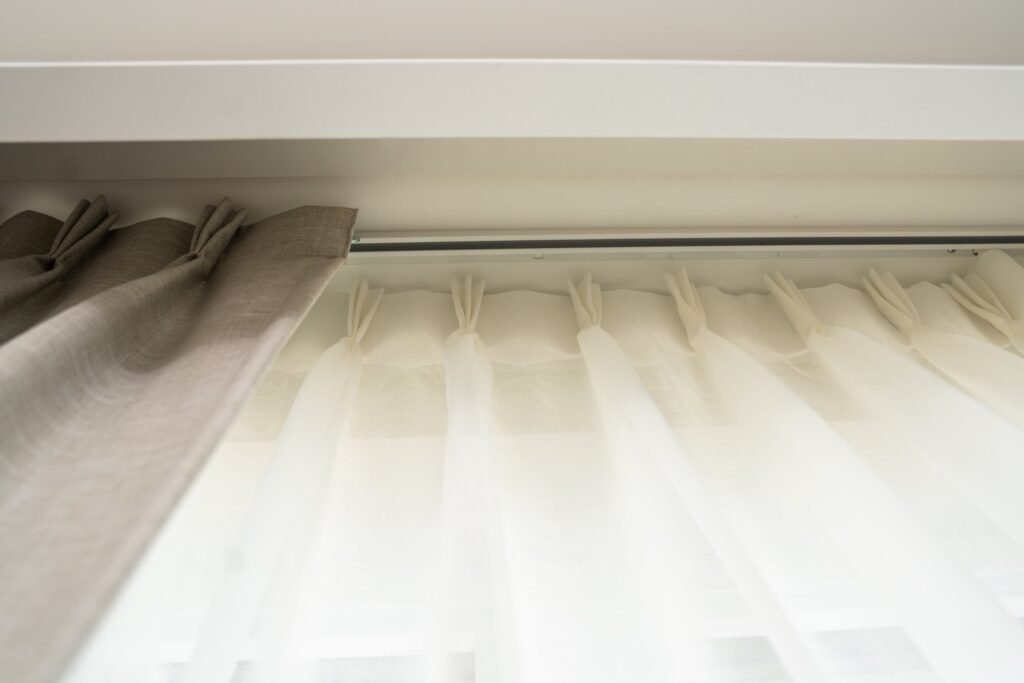
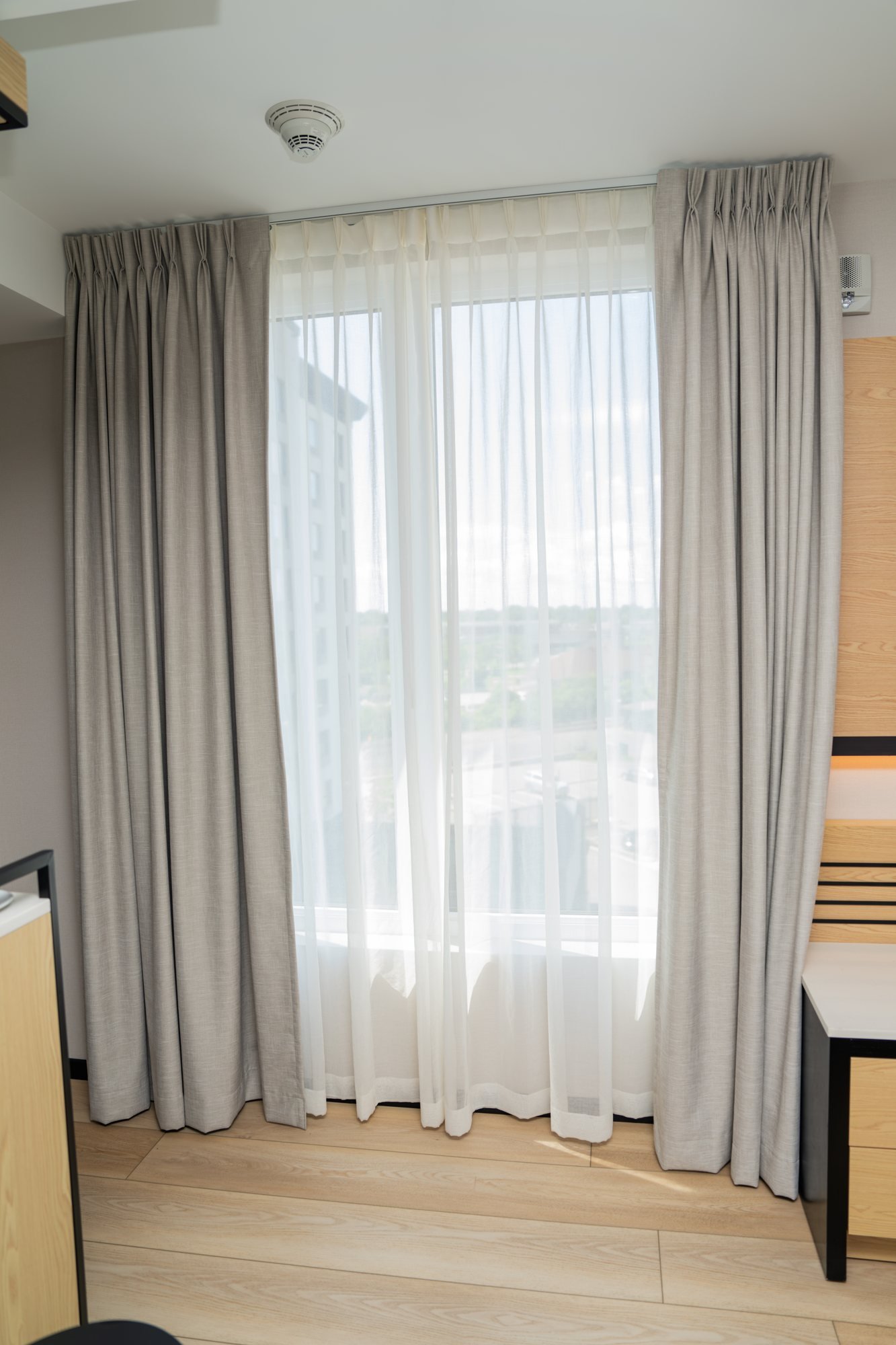
The track decides how the drapery hangs, how it moves and how long it lasts, so we like to settle it before anyone falls in love with a fabric. A few questions shape everything else. Is it ceiling-mounted or wall-mounted? What heading style does the design call for? How many layers need their own run?
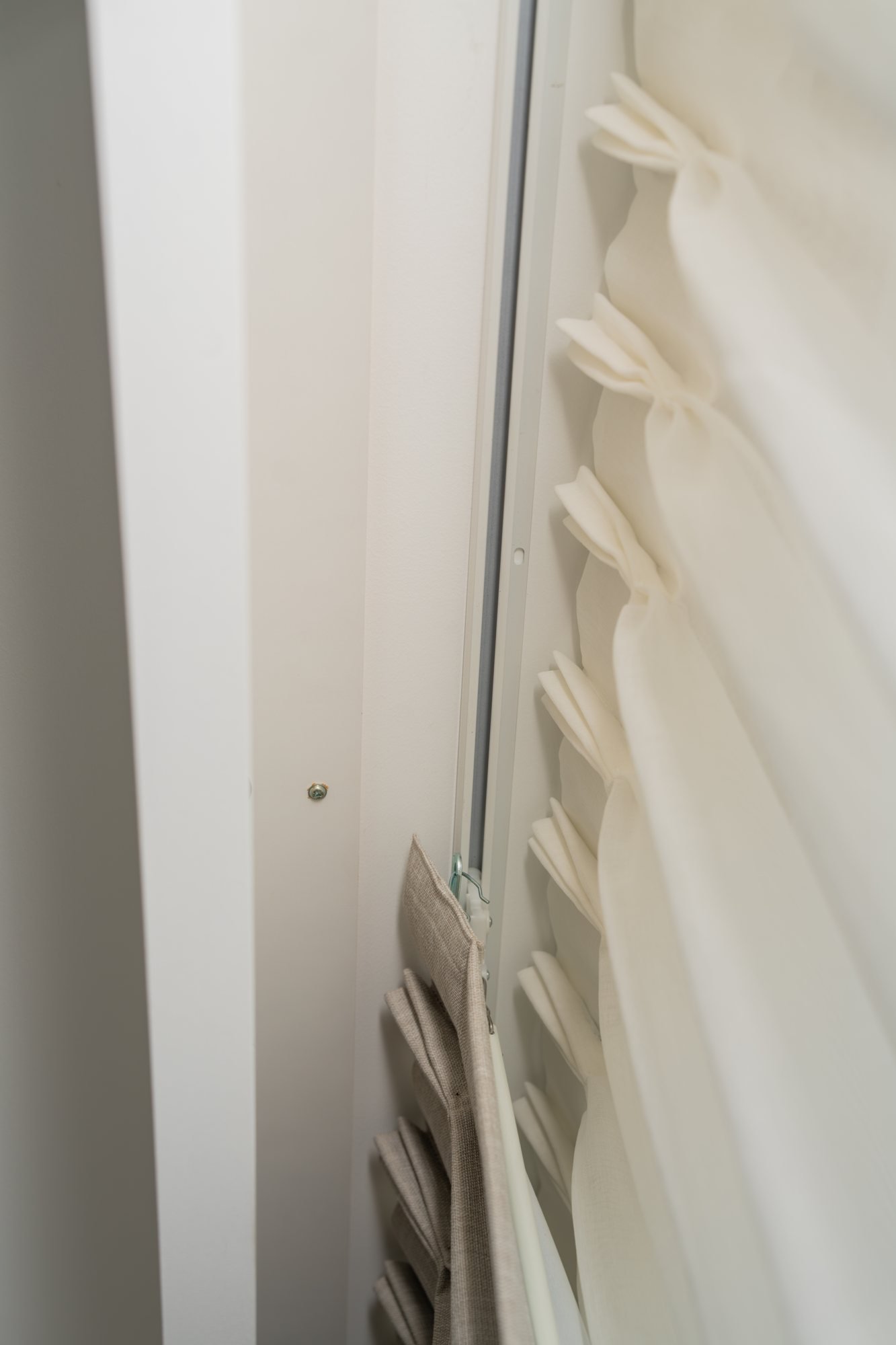
In most guestrooms we put the sheer and the blackout on separate runs, so each one opens and closes on its own. We also plan an overlap where the panels meet in the middle and a return at each end, which is what stops light from sneaking in at the edges. And because hotel drapery is opened and closed thousands of times, the hardware has to be commercial grade and glide easily, so guests never have to tug on the fabric to get it moving.
Get the fullness right
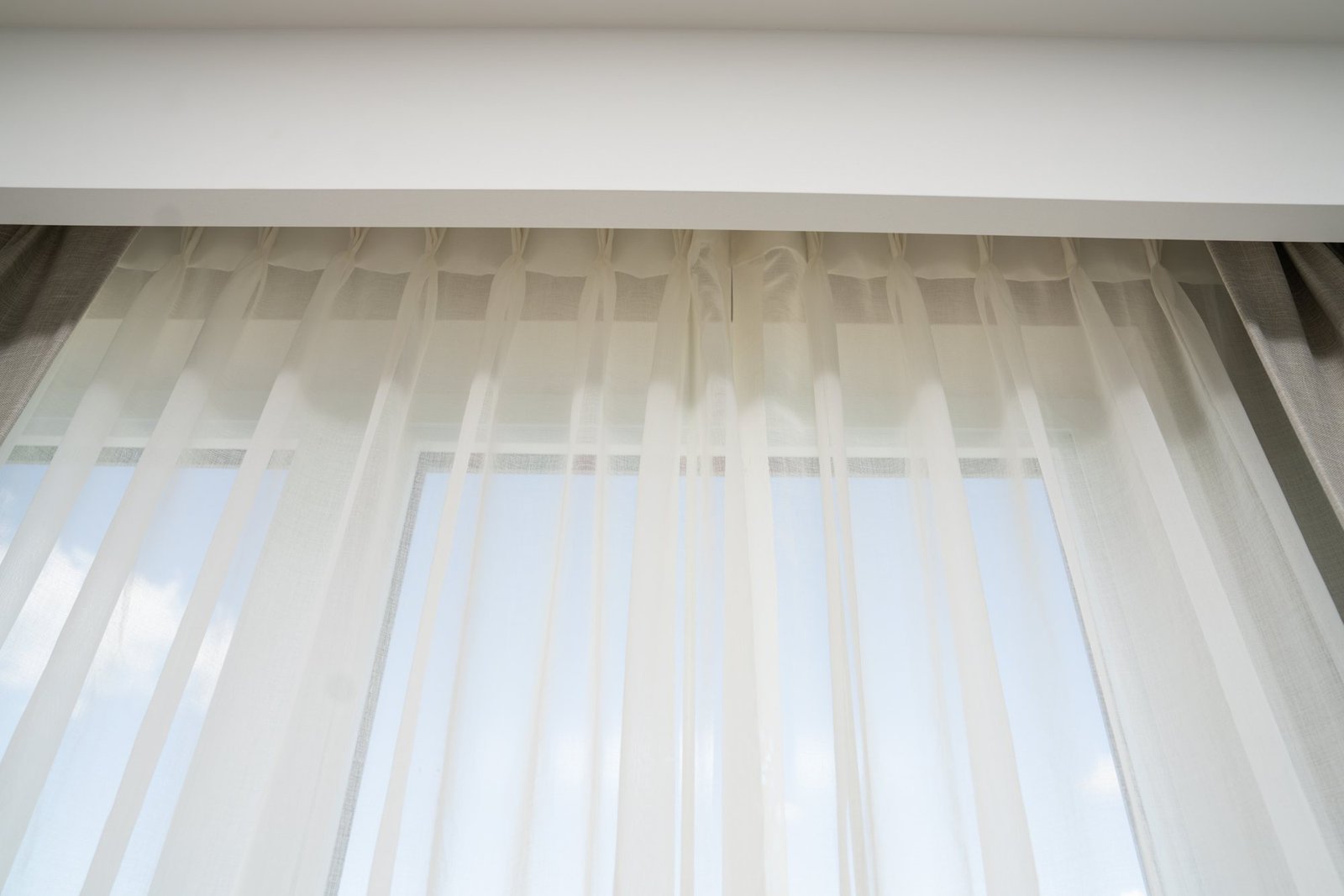
Fullness is how much fabric goes into a panel compared with the width of the track. At 2.5x, one metre of track holds two and a half metres of fabric. That extra fabric is what gives drapery deep, even folds. It blocks more light at the edges, and it simply looks richer. Go too lean and panels look flat and pull apart at the seams. Go too heavy and the panels get bulky when they’re open.
The other number to give us early is the stack-back: how much wall space the drapery has to sit in when it’s open. Without it, open panels can end up covering part of the glass and take away daylight the room was planned to have.
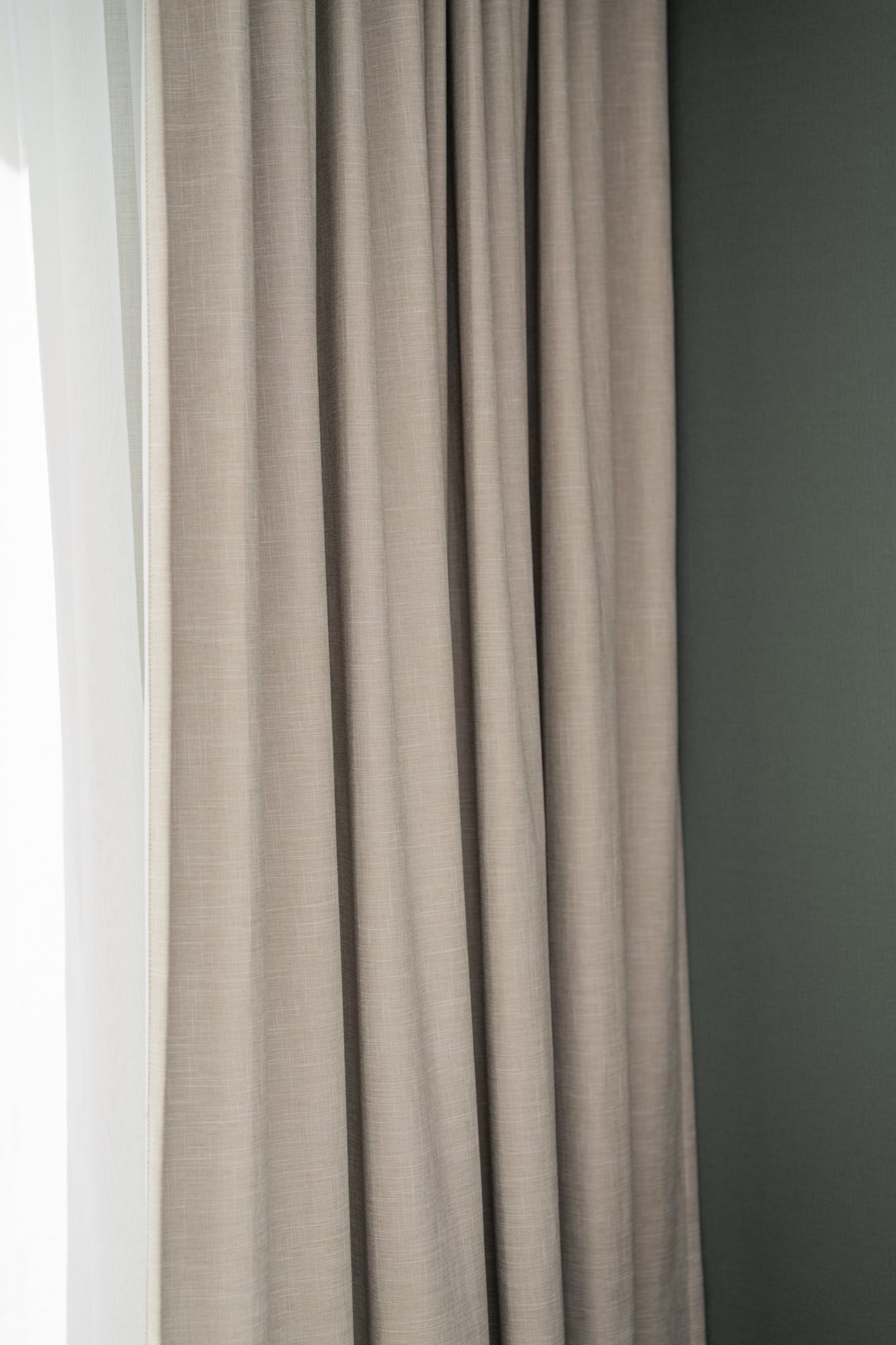
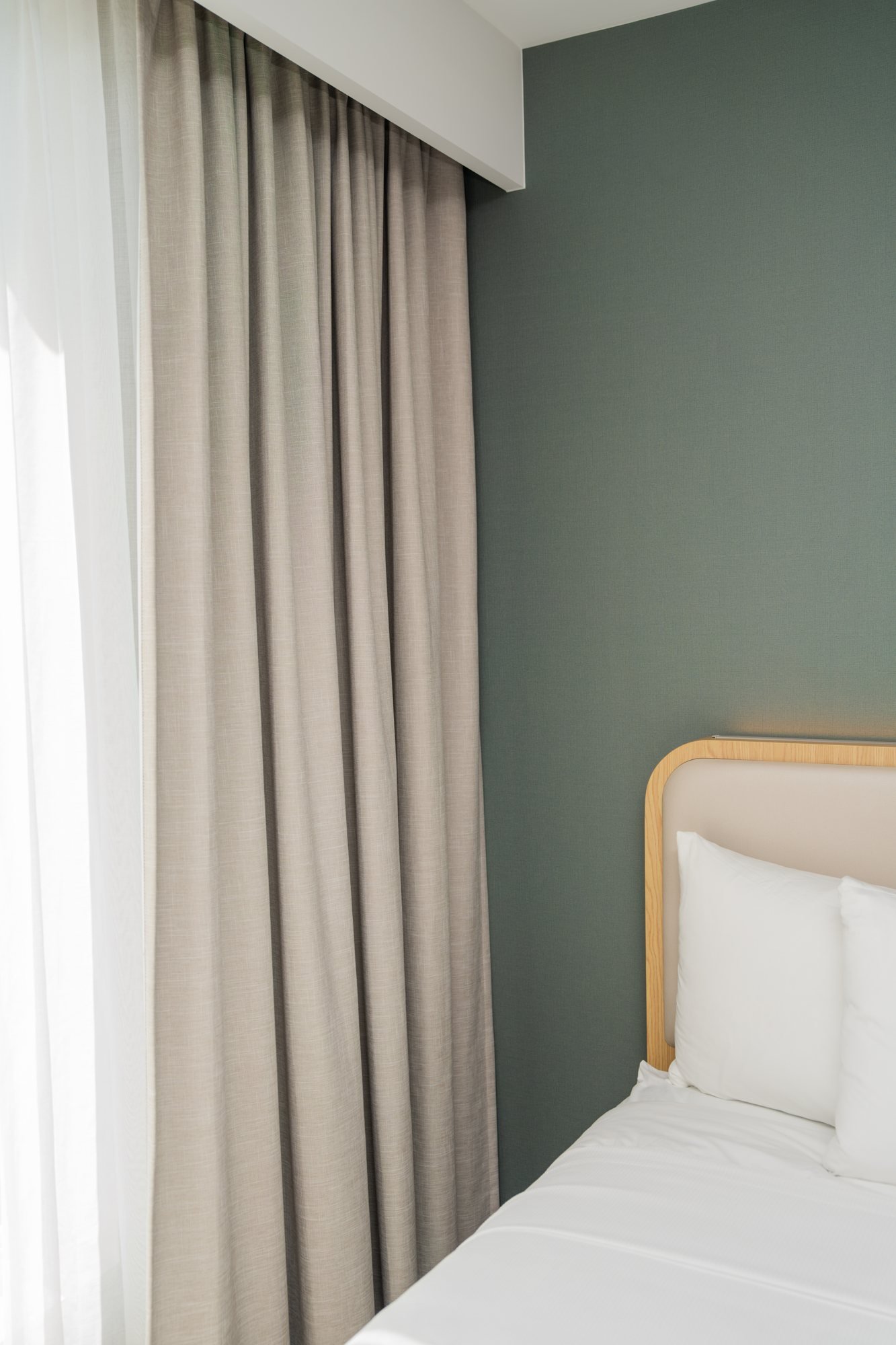
Layer a sheer and a blackout
Almost every hotel room we work on gets both, and for good reason. The sheer filters daylight and keeps the view while giving guests privacy during the day. The blackout closes for sleep and privacy at night.
At an airport property like Hyatt Place Montréal Airport, that matters even more. Guests arrive at every hour and many sleep during the day, so the blackout has to truly work, and the sheer has to keep the room bright and calm the rest of the time. When you spec the blackout, think about the lining colour that faces the window too, since many brands want every room to look the same from the street.
Plan for the people who maintain it
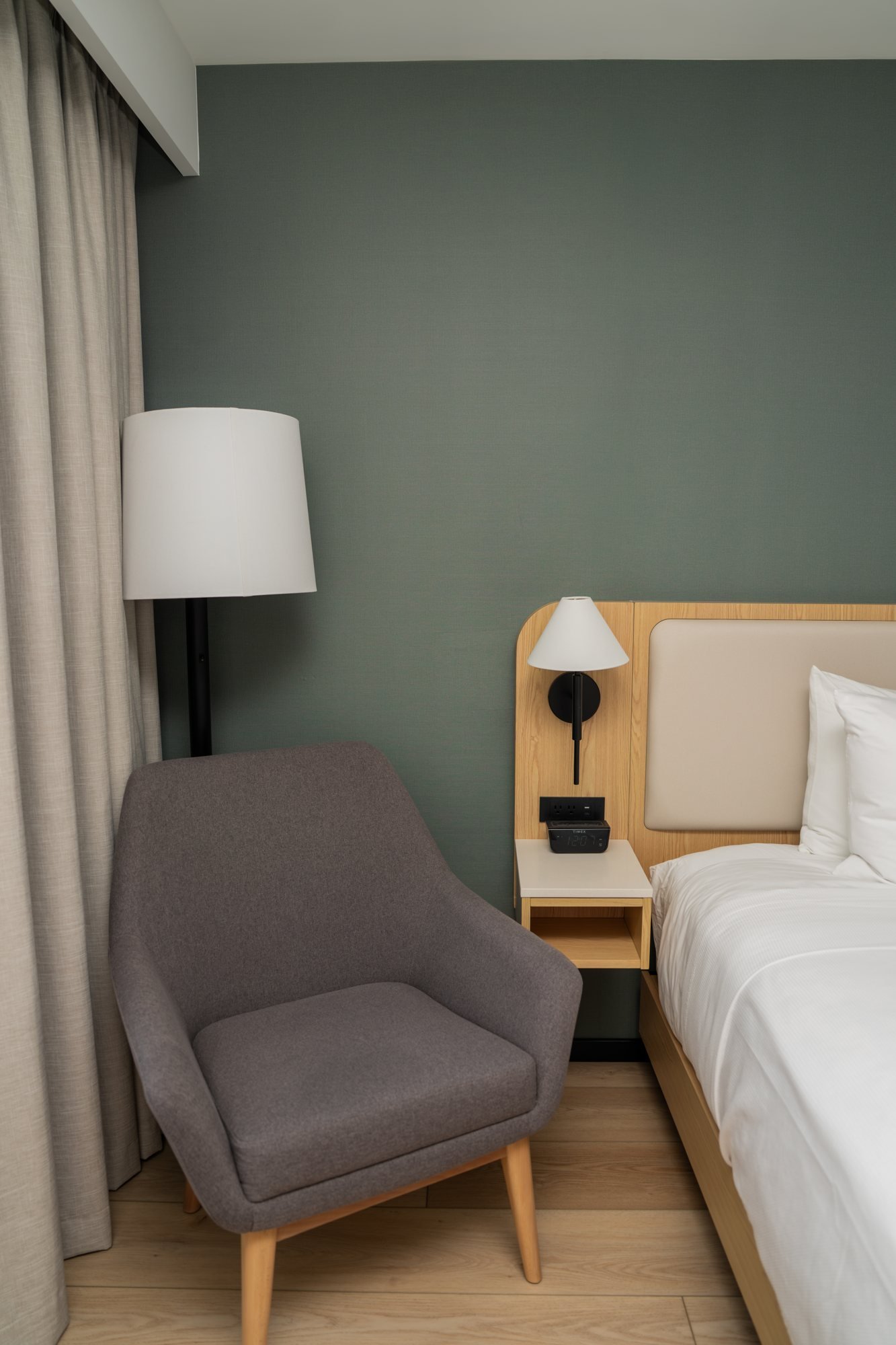
Drapery stays in a hotel for years, and the housekeeping and maintenance teams live with it every day. A few details make their job easier:
- Fabrics that meet the fire code for the project, confirmed before production
- Weighted hems, so panels hang straight and stay in place
- Panels that come down easily for cleaning or replacement
- A few spare panels kept on site, so a damaged one can be swapped the same day
The same thinking, on a bigger stage
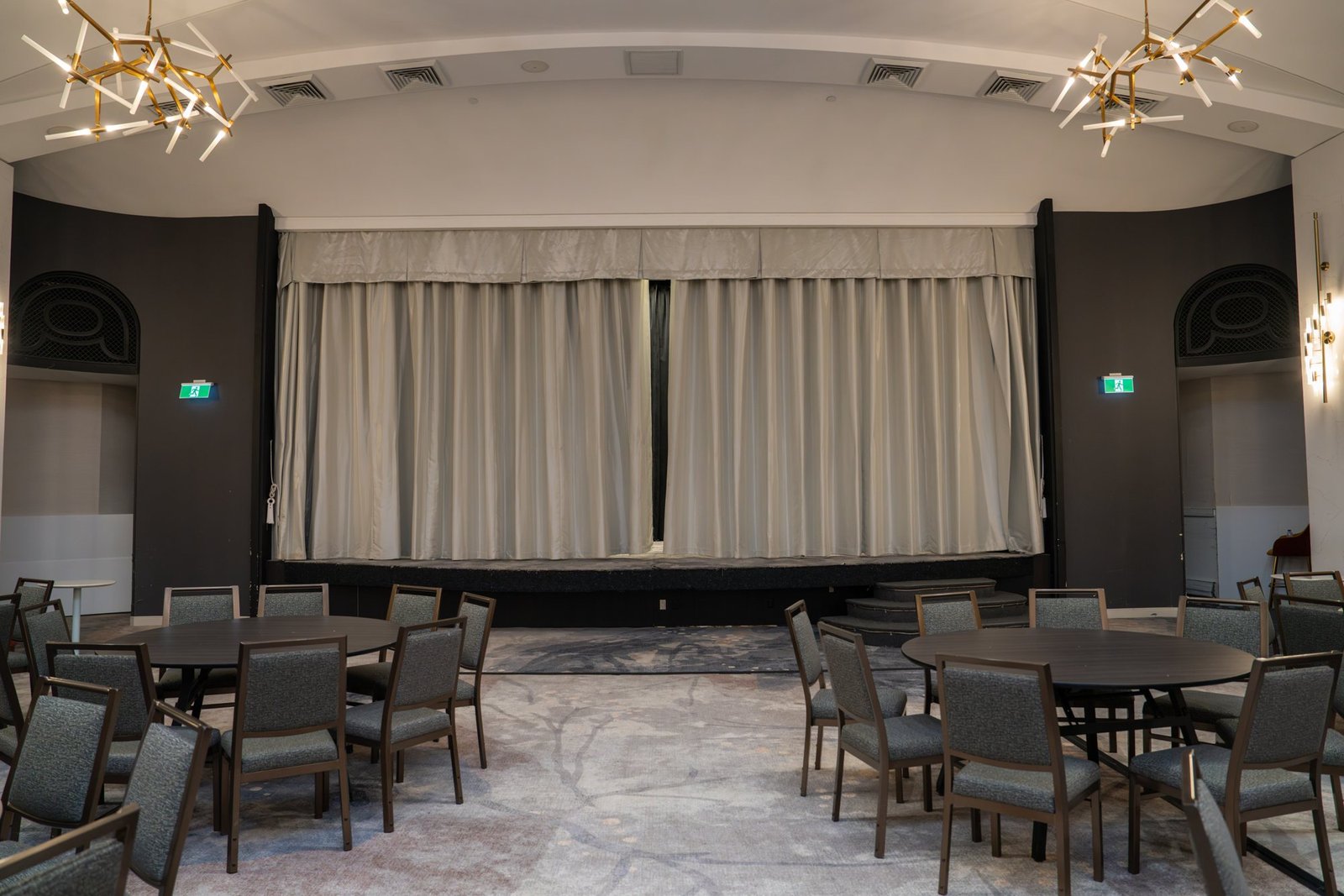
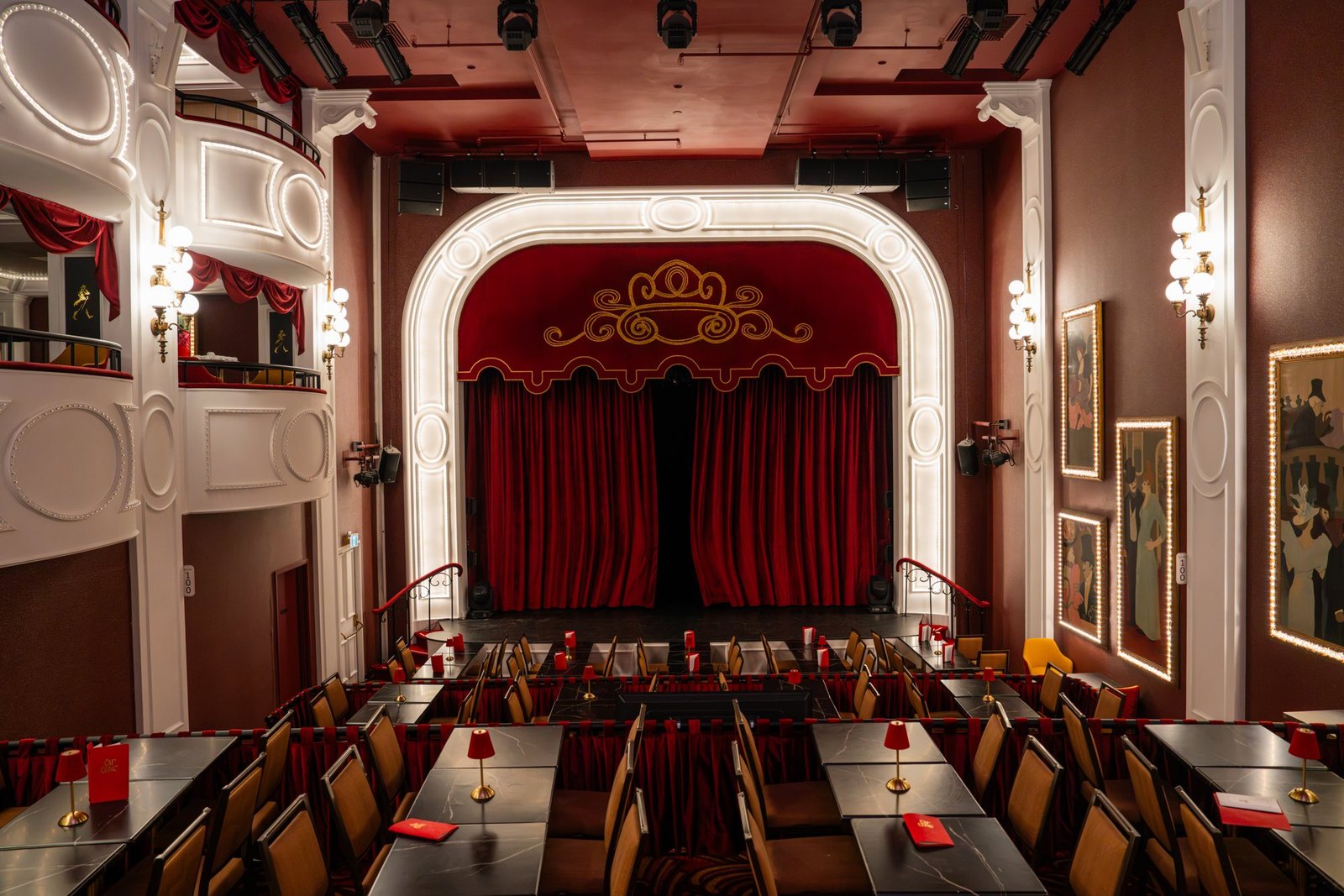
Event spaces follow the same rules at a larger scale. At the Marriott Château Champlain in Montréal, Lutex Design manufactured the custom drapery for the ballroom and the theatre: the ballroom’s stage drapery and arched alcove panels, and the theatre’s red velvet stage curtain and swagged box draperies. Every piece was planned for the room’s acoustics and made to move night after night, event after event.
If you’re specifying drapery for a hotel project, send it our way early. We’ll go through the track, fullness and fabrics with you before anything is cut, so what gets installed is exactly what you drew.